
What are the challenges in the die-casting process for zinc alloy components?
Time :2025-12-10 Hits:1195
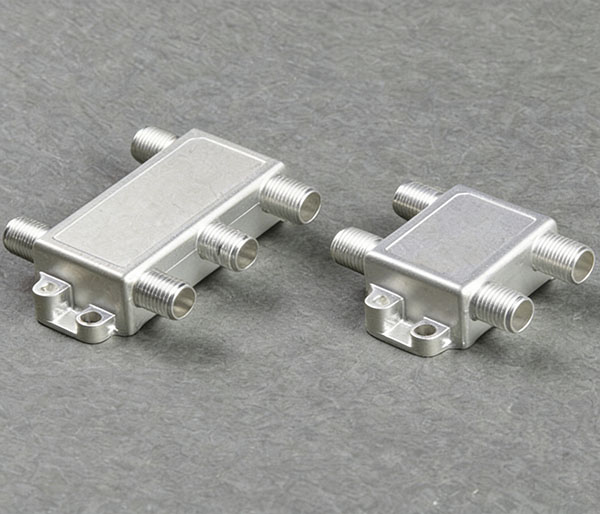
I. Process Limitations Due to Material Properties
Low Melting Point but Prone to “Burn-off”
Zinc alloys have a low melting point of only 380-420°C. During die casting, temperatures slightly above 450°C cause zinc vaporization and alloy composition changes. This process also readily produces oxidation inclusions (forming zinc slag), compromising casting purity.
High Flowability but Prone to “Spillage”
Zinc alloys exhibit excellent fluidity, enabling filling of complex cavities. However, they also readily overflow through mold gaps, creating flash and burrs. This not only increases post-processing costs but may also clog mold venting channels.
II. Challenges in Process Control During Forming
Difficult Mold Temperature Matching
Zinc alloys solidify rapidly. If mold temperature is too low, castings may exhibit cold shuts, incomplete filling (cavity underfilling). Conversely, excessively high temperatures cause sticking and difficult demolding, accelerating mold thermal fatigue (shortening mold life).
Balancing Venting and Shrinkage Cavities
During die casting, molten metal fills at high speeds (tens of meters per second). Inadequate mold venting leads to porosity, while excessive venting may cause uneven metal contraction, resulting in shrinkage cavities/porosity (especially in thick-walled sections).
III. High-Risk Quality Defects
Intergranular Corrosion Hazards
If impurities (e.g., lead, cadmium) exceed standards during die casting or subsequent passivation treatment is improper, zinc alloys are prone to intergranular corrosion (commonly known as “zinc embrittlement”). This causes sudden fractures under stress and is difficult to detect through initial visual inspection.
Difficulties in Dimensional Accuracy Control
Zinc alloys exhibit a cooling shrinkage rate of approximately 0.3%-0.6%, with uneven shrinkage across different sections (thin-walled/thick-walled). Combined with mold thermal expansion and contraction, dimensional fluctuations frequently occur during mass production, significantly impacting high-precision interfaces (e.g., threaded connections as mentioned).
IV. Challenges in Post-Processing
Zinc die-cast surfaces are prone to oxidation and discoloration, necessitating post-treatments like passivation or electroplating. However, improper pretreatment (degreasing, pickling) during electroplating can cause blistering or peeling of the coating. Furthermore, zinc's low electrode potential may lead to galvanic corrosion when contacting other metals, limiting its combination with different materials.
These challenges must be addressed through precise temperature control, mold optimization (e.g., adding venting channels and cold runner wells), and raw material purification. This exemplifies how “details determine quality” in die casting processes.
PREV:Surface Treatment Methods for Die-Cast Aluminum Alloys
NEXT:没有了!
Related News
- What are the challenges in the die-casting process for zinc alloy components?
- Surface Treatment Methods for Die-Cast Aluminum Alloys
- Thermal Performance of Aluminum Alloy Die-Cast Lamp Housings
- How Zinc Alloy Die Casting Delivers High Precision in Modern Manufacturing
- Exploring the infinite possibilities of aluminum alloy die-casting processing
- Do You Know The Injection Speed Of Aluminum Alloy Die Casting?
- What is Zinc Die Casting?
Related Product
-
Precision Marine Propeller Blade Machining | Aluminum Alloy Die Casting Components | Marine Propulsion Parts Manufacturer
-
Aluminum Alloy Marine Propeller Die Casting | Custom Marine Propulsion Blades | Precision Boat Hardware Manufacturing
-
Marine Die Casting Manufacturer,Aluminum Alloy Boat Hardware ,Precision Propeller Casting Services
-
Aluminum Alloy Propeller Blade Manufacturer , Custom Marine Propeller Casting ,Marine Power Hardware Supplier